There are two things I wear with pride every day: my Apple Watch and myself. To some, an Apple Watch is just a trendy accessory, but to me, it’s far more than that. It’s not about fashion; it’s about function. It’s not about looking good; it’s about feeling good. This small device once became the catalyst for a major transformation in my life. From 162 pounds to 124 pounds, it didn’t just track my steps—it tracked my progress, measured my determination, and celebrated my victories. It’s a health gadget that reminds me to move, to breathe, and to take charge of my well-being. Every ring I close isn’t just a goal met; it’s a promise kept—to myself.
But alongside my Apple Watch, I wear something even more important: myself. You might wonder what I mean by that. Recently, I blogged about wearing my skin, and that’s exactly what it is. To wear myself is to embrace who I am, unapologetically and confidently. It’s to walk through life with the assurance that there’s nothing better than being simply and authentically me. Just as my Apple Watch reflects my commitment to physical health, wearing myself speaks to my character and self-esteem.
One tracks my steps; the other carries my stride. One encourages me to move forward; the other ensures I do so with confidence. One measures my activity; the other reflects my identity. Together, they remind me that true well-being comes not just from taking care of my body, but also from embracing my soul.
When I wear my Apple Watch, I’m reminded of how far I’ve come physically. When I wear myself, I’m reminded of how far I’ve come emotionally. One helps me become the best version of my physical self; the other reminds me that I already am the best version of my true self.
So every day, as I strap on my Apple Watch and step into my skin, I carry with me two symbols of self-care: one for my health, and one for my heart. Both tell my story. Both reflect my journey. And both remind me that there’s no better way to live than by wearing my one and only, irreplaceable me.
Every time I write, I am keenly aware of my audience—the ones who might one day read my words, the ones I imagine sitting across from me, as if we are face to face, eye to eye. I appreciate them, these invisible readers who bring their own perspectives and experiences to the table. And yet, as much as I hold them in my mind, I understand that for my words to truly resonate, I must first write for myself. I must write with the passion and authenticity that only comes from engaging with something I know, something that speaks to my core. Because without that inner connection, my words are hollow, and my audience, perceptive as they are, would surely know it.
To write effectively, I must be fully invested. When I am deeply interested in what I’m writing about, that interest translates; it becomes a bridge between my ideas and my audience’s engagement. I have to write on topics I truly know or am passionate about, drawing from genuine understanding, so that when my words reach others, they carry weight, depth, and conviction. Writing without passion is like delivering a speech you don’t believe in—your words may flow, but they won’t land. For a persuasive argument to resonate, it must be something I, as the writer, am wholly convinced of.
But writing persuasively is never simply a one-sided exercise. It’s about anticipating counterarguments, respecting those opposing views, and addressing them in a way that honors my audience’s intelligence and perspective. I know that when I write, not everyone will agree. In fact, I welcome the dissent; it keeps the conversation dynamic, alive, and meaningful. Through respectful rebuttal and thoughtful consideration, I engage in a dialogue—not a monologue—synthesizing all views, my own included, until I arrive at something richer than where I started.
So, I write for myself first. I write with conviction, with passion, and with the knowledge that to engage my audience, I must start from a place of truth within myself. But I also write with the goal of “selling” my ideas, of conveying my perspective as convincingly as I can. To do that, I rely on facts, scientific evidence, and reliable sources, weaving together a foundation that strengthens my argument and demonstrates my respect for those who will read my words.
Ultimately, writing for myself and writing for my audience are not opposing goals. They are, in fact, two sides of the same coin. When I am deeply invested in what I write, that sincerity becomes my message, my means, and my appeal. It is in writing for myself that I truly write for you, inviting you to see as I see, think as I think, and perhaps, even feel as I feel.
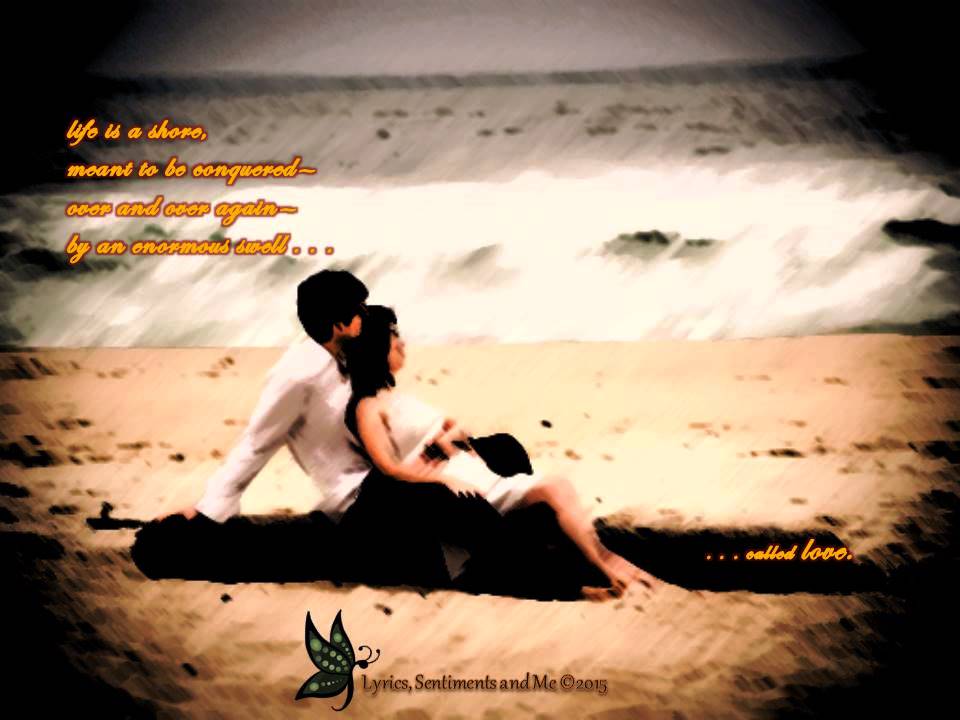
“Life is a shore, meant to be conquered over and over again by an enormous swell called love,” me.
Love, a word that has inspired poets and mystics for centuries, is often thought of as an emotion—a feeling that rises within, warms the heart, and connects us to others. Most people see love this way: a state of passion, joy, and comfort. But to see love as only an emotion is to see only half of its nature. Emotion, by itself, can be fleeting; it ebbs and flows, as unpredictable as the wind. To love only when it is easy, when the feeling is strong, is a limited kind of love. But what if we saw love not just as an emotion, but as an act—a conscious choice that endures beyond emotion’s whim? This perspective on love is powerful, transformative, and, ultimately, life-changing.
To love as an act is to go beyond oneself, to step into the world and meet others with purpose. It is the parent who sacrifices sleep to care for their child, the friend who shows up on the darkest days, the stranger who lends a hand to another without expectation. When love becomes an action, it transcends the limitations of mere feeling. It roots itself in commitment, in the decision to be present, to serve, to give. It transforms into something greater than words or fleeting sentiment; it becomes the bond that heals wounds and bridges divides.
Love as an act has the power to change people and even entire situations. Imagine the partner who chooses to forgive, the teacher who sees the best in every student, the neighbor who extends kindness instead of judgment. Love as action can soften even the hardest hearts, bringing about changes in people that simple feelings alone cannot. This form of love becomes a force of unity, of connection, of deep healing, as it touches lives and lights the way toward understanding.
When we rely on love solely as an emotion, it often falls victim to circumstances. Love that depends only on feeling can weaken with time, with distance, with conflict. But when we embrace love as an action, we rise above these limitations. Love becomes a commitment we honor, a promise we keep even when feelings waver. We become participants in love, rather than just recipients of it.
If more of us could see love as an act—something that is within our control, something we choose rather than something we wait to feel—more of us might find ourselves engaging with it daily. Love would no longer be a passive experience, something that “just happens,” but an active decision that defines who we are and how we move in the world. This perspective transforms love into a choice, a practice, something we can nurture and strengthen over time.
And therein lies the true power of love. It is both feeling and doing, both presence and action. It invites us to transcend ourselves, to connect deeply with others, to give without expectation, and to find joy in the act of loving. Love, when embraced as an action, is limitless—it is the difference that binds us, that shapes us, that defines us. Love, then, becomes more than emotion; it becomes life itself, experienced fully and wholeheartedly.
Time is the quiet tyrant, invisible and insatiable, a master whose hands turn every moment into memory, every breath into a thread unraveling. It strides unseen, yet rules with iron grace, painting our lives in invisible brushstrokes, etching our joys and sorrows with a patient, relentless hand.
Time wears a thousand faces. It is the dawn that whispers promises of tomorrow, the dusk that steals light from the sky. It is the clock’s gentle ticking, each second a silver needle stitching us closer to both the unknown and the inevitable. Like a river winding through valleys of hope and mountains of regret, time flows forward, never pausing to admire the landscapes it shapes, never swayed by pleas for mercy or haste.
It is both blessing and thief, granting youth in one hand, taking innocence in the other. Lovers swear by it—forever, they say, as if time itself could be charmed, as if they could cage its wild heart. But time laughs, knowing that all vows are but echoes that fade, promises like petals falling in a summer storm. It keeps its own counsel, loyal only to the unyielding march toward tomorrow.
And yet, in all its ironies, time is the tender artist, sculpting the wrinkles of wisdom on an elder’s face, leaving memories like fragrant blossoms in the minds of those who linger. It is a paradox of permanence and impermanence, giving meaning to the fleeting, turning moments into mosaics, seconds into stories. For time is not cruel—it simply does not care.
“Tick, tock,” it hums, its voice a lullaby and a warning, as it spins the universe upon an unseen axis, binding the world together with a pulse that neither slows nor stills. It is the heartbeat of history, the measure of all things mortal, the silent sovereign whose rule cannot be broken, whose essence is mystery itself.
Invent a holiday! Explain how and why everyone should celebrate.
In a world increasingly interconnected through technology and trade, cultural uniqueness has become both a point of pride and a delicate treasure at risk of being diluted. Amid this vast, global blend, there is a profound need to celebrate, respect, and preserve the cultural diversity that makes our world so rich. World’s Cultural Week would serve as a vibrant platform, akin to the Olympic Games, for every nation to showcase its unique traditions, dances, and clothing. This initiative would offer the world an opportunity not only to observe each culture’s individual beauty but also to build a foundation of understanding, unity, and respect for diversity.
Culture is one of the most powerful elements that define us, shaping our identity, beliefs, and values. It encompasses our language, customs, dress, music, and dance. From India’s elegant saris to Scotland’s iconic kilts, from the rhythmic African drumming to the poetic movements of Japanese tea ceremonies, each culture tells a story that has been passed down through generations, preserving the unique lens through which its people view the world. However, as we continue to live in an era of rapid globalization, these diverse cultural expressions face unprecedented challenges, often being overshadowed by dominant global cultures. By establishing World’s Cultural Week, we would create a global stage to proudly celebrate these traditions, ensuring they remain alive and cherished by both current and future generations.
A week dedicated to cultural exchange would provide a rare opportunity to engage with the world’s rich diversity in a tangible way. Imagine witnessing traditional dances from every corner of the globe, from the powerful haka of the Māori people to the intricate ballet of Russian folk dancers. By observing these rituals, we come to appreciate the stories, values, and passions that unite communities worldwide. These experiences, however, would be more than mere entertainment; they would be an education, teaching us how to look beyond stereotypes, misunderstandings, and assumptions about one another. This exposure would foster an environment of curiosity, empathy, and admiration for the unfamiliar, creating stronger connections among people from all walks of life.
Cultural attire is another expressive art form that deserves a place on the world’s stage. Each garment, from an Ethiopian gabi to an ornate Chinese qipao, carries with it not only beauty but meaning, tradition, and identity. Clothing serves as a language of its own, with colors, patterns, and styles representing everything from social status to regional heritage. For instance, the vibrant red robes worn by the Maasai people of Kenya signify bravery, strength, and unity, while the colorful embroidery on Mexican huipiles reflects a connection to the earth, nature, and indigenous roots. Through World’s Cultural Week, the world would have a rare opportunity to witness and celebrate this diversity, cultivating an appreciation for the creativity and significance of each cultural expression.
Celebrating this diversity also has profound social benefits. It allows us to recognize our differences as strengths rather than points of division. The arts, music, and traditions of each culture show us the beauty of humanity in its many forms and invite us to find common ground within this diversity. Just as the Olympics foster a spirit of respect and camaraderie among nations, World’s Cultural Week would bring the world together in appreciation of each culture’s heritage. In seeing both the uniqueness and universality in each tradition, we would actively work against cultural biases and foster mutual respect, making strides toward a more inclusive and harmonious world.
Moreover, this initiative would create new opportunities for cultural preservation, as young generations would see the value and relevance of their heritage in a global context. Often, cultural traditions face the risk of fading away as younger generations adapt to modern lifestyles and influences. By bringing cultural practices to a world stage, World’s Cultural Week would give these traditions new life and importance, encouraging youth to explore and embrace their cultural roots. This initiative would also boost local economies, as artists, artisans, and performers would find a global platform for their crafts, reaching audiences and supporters beyond their borders.
World’s Cultural Week would be more than a spectacle; it would be a platform for building bridges across nations, enabling an exchange of ideas and values that goes beyond language barriers. In witnessing and celebrating each other’s cultural expressions, we would take a step toward understanding and valuing the myriad ways humanity finds meaning, joy, and identity. Through shared stories, dances, and clothing, we would celebrate not just our differences but our shared humanity, finding unity in diversity.
In conclusion, the need for World’s Cultural Week is clear. It would be an opportunity to honor and preserve the rich cultural tapestry of our world, fostering an environment where every nation’s heritage is valued and respected. This celebration would remind us that, although we are unique in our cultural expressions, we are all part of a shared human family. By embracing diversity through proactive celebration and exchange, we can move closer to a world that appreciates the beauty of differences and the strength of unity.
What’s the biggest risk you’d like to take — but haven’t been able to?
Risk is an uncomfortable word. By nature, we prefer safety, certainty, and familiarity. Nobody enjoys stepping into the unknown where failure, disappointment, or loss might wait. However, to gain anything worthwhile—whether it’s success, love, or personal growth—risk is inevitable. Life itself is a gamble, and every decision, big or small, carries some element of uncertainty. The real question is not whether to take risks, but how willing we are to take them.
For me, I don’t embrace risk blindly. Instead, I carefully weigh the odds. If the chances of winning or succeeding are in my favor, I might just take the leap. But my choice isn’t driven by emotion alone; I use every tool available to evaluate my options. Whether it’s math, statistics, research, advice, or past experience, I gather the information needed to make a sound decision. Often, common sense is the best guide—a simple but effective compass that helps me know when to step forward or pull back.
Risk isn’t always about chasing monumental dreams; sometimes it’s found in everyday choices. We take risks when we start a new job, open up to someone emotionally, or pursue a passion that others may dismiss. These decisions come with uncertainty, but they also hold the potential for great rewards. The truth is, avoiding all risk can lead to stagnation, leaving us with “what ifs” and missed opportunities. As the saying goes, “You miss 100% of the shots you don’t take.”
However, not all risks are created equal. It’s essential to be mindful and deliberate. Some risks aren’t worth the consequences if the odds are stacked too high against us. Reckless behavior isn’t bravery—it’s carelessness. The key lies in balancing ambition with caution. When I know the potential payoff outweighs the downside, I feel more prepared to move forward. After all, life rewards those who dare to act but also have the wisdom to choose their moments wisely.
In the end, risk is unavoidable if we want to grow, achieve, and live meaningfully. Every person’s threshold is different, but the question remains the same: How willing are you to take the risk? Whether the prize is a dream fulfilled, a new relationship, or a goal achieved, it takes courage to try. And even when the outcome is uncertain, the attempt itself can teach us more than playing it safe ever will.
Most commonly known as Van Gogh, his works are a powerful testament to the intensity of human emotion, the beauty of the natural world, and the complexities of artistic innovation. His paintings, characterized by bold colors, thick brushstrokes, and an emotive use of light, offer a unique visual language that has captivated viewers for over a century. Van Gogh’s ability to infuse raw emotion into his landscapes and portraits sets him apart from many of his contemporaries. Works like Starry Night and Sunflowers demonstrate his mastery in translating the mundane into the transcendent, using vivid color contrasts and swirling forms to evoke both wonder and melancholy.
Van Gogh’s Starry Night is perhaps one of the most recognizable and beloved paintings in the world. Its swirling sky and the haunting glow of the stars reflect his inner turmoil, yet the piece still radiates a sense of awe. This tension between beauty and madness is a hallmark of Van Gogh’s style, making his works deeply introspective yet universally resonant.
Despite his posthumous fame, Van Gogh was largely unappreciated during his lifetime, selling few works and struggling with mental health issues. His style was unconventional for his time, often dismissed for its expressive intensity. However, it is precisely this intensity that makes his art so enduring. His distinctive brushwork—often applied with visible, almost sculptural strokes—imbues his paintings with a palpable energy, making them feel alive. His works transcend mere visual representation, delving into the emotional and psychological realms.
In sum, Van Gogh’s legacy lies in his ability to convey the beauty and pain of existence with a distinct artistic vision. His works challenge traditional notions of beauty and reality, leaving an indelible mark on the art world and influencing generations of artists. Through his art, Van Gogh invites viewers not only to see the world differently but to feel it more deeply.
The Enduring Power of Love and the Goodness of Humanity
In a world often dominated by headlines of conflict, division, and despair, it can be easy to lose sight of the innate goodness that lies within humanity. However, when we look beyond the noise and chaos, we discover that love and compassion are the true forces that shape our world. Despite the challenges we face, it is love—whether expressed through acts of kindness, empathy, or solidarity—that has the power to transform lives, heal wounds, and unite us in our shared humanity. This essay will advocate for the belief in love and the inherent goodness of humanity, exploring how these qualities persist and prevail even in the most trying circumstances.
Throughout history, love has been the cornerstone of our greatest achievements and the driving force behind our most noble endeavors. From the selfless acts of individuals who sacrifice their own comfort for the well-being of others, to the collective movements that have fought for justice and equality, love has been the catalyst for change. Consider the civil rights movement, where love for one’s fellow human beings transcended the hatred and bigotry of the time, leading to monumental progress in the fight for equality. Or the countless examples of everyday heroism, where strangers come together in times of crisis, offering aid and comfort to those in need. These acts, large and small, demonstrate that love is not only a personal emotion but a universal force that binds us together.
At the heart of this love is the inherent goodness of humanity. Despite the flaws and imperfections that exist within each of us, there is a fundamental decency that drives us to care for one another. This goodness is evident in the empathy we feel for others, the joy we experience in their happiness, and the pain we share in their suffering. It is what compels us to help a stranger in distress, to stand up against injustice, and to seek out ways to make the world a better place. The goodness of humanity is not an abstract concept; it is a lived reality, manifesting itself in countless ways every day.
One might argue that the prevalence of suffering and injustice in the world contradicts the notion of human goodness. However, it is precisely because of our capacity for love that we recognize these wrongs and are motivated to address them. The very fact that we are disturbed by cruelty and inhumanity speaks to our innate sense of morality and our desire to create a world where love, rather than hatred, prevails. It is this desire that drives us to advocate for change, to extend a helping hand, and to build communities based on mutual respect and care.
Furthermore, love is resilient. Even in the face of adversity, love endures and often grows stronger. It has the power to heal wounds, bridge divides, and overcome obstacles that might otherwise seem insurmountable. Love gives us the strength to persevere through hardship, to forgive those who have wronged us, and to find hope in the darkest of times. This resilience is a testament to the enduring goodness of humanity—a reminder that no matter how challenging our circumstances may be, love remains a constant, guiding light.
In advocating for love and the goodness of humanity, it is important to recognize that these qualities are not mere idealism, but practical forces with the ability to effect real change. Love inspires action; it moves us to address the needs of others, to fight for justice, and to build a more compassionate world. The goodness of humanity is the foundation upon which societies are built, fostering cooperation, empathy, and a shared sense of purpose. When we believe in love and the inherent goodness of others, we contribute to a culture that values and promotes these qualities, creating a positive feedback loop that benefits all.
In conclusion, love and the goodness of humanity are not only worth believing in—they are essential to our collective well-being. They are the forces that sustain us, that drive us to be better, and that hold the potential to transform our world. By embracing love and recognizing the goodness in others, we can overcome the challenges that divide us and work together to build a future where compassion and kindness are the guiding principles. In a world that often seems fraught with darkness, love is the light that will always lead us home.

 Lyrics, Sentiments and Me
You must be logged in to post a comment.